

 Honest Prices. Always. Not for Everyone.



Perfume Scent Families Explained: Fresh, Floral, Woody and Warm
Walk into any perfume shop and the first thing you meet is a wall of names. Some bottles say fresh, some say warm, some say floral, and none of them tell you what you will actually enjoy wearing. A simpler way to read a fragrance is to learn the scent families. Once you know four or five of them, the wall of bottles starts to make sense.
This guide explains the main scent families in plain language: what each one smells like, what kind of ingredients sit inside it, and how to work out which one suits you. It is written for anyone who is still figuring out their taste and wants a calm starting point rather than a sales pitch.
What is a scent family?
A scent family is a group of fragrances that share a similar character. Perfumers and fragrance writers use families the way a cook might say a dish is spicy, sweet or sour. It is a shortcut. If you know you like one fragrance in a family, you will often like others that sit in the same group.
Families are not strict boxes. Many perfumes sit between two groups, for example a floral with a woody base, or a citrus with a spicy heart. Treat the families as a map, not a rulebook. They help you describe what you like, and that makes shopping much easier.
The fresh family
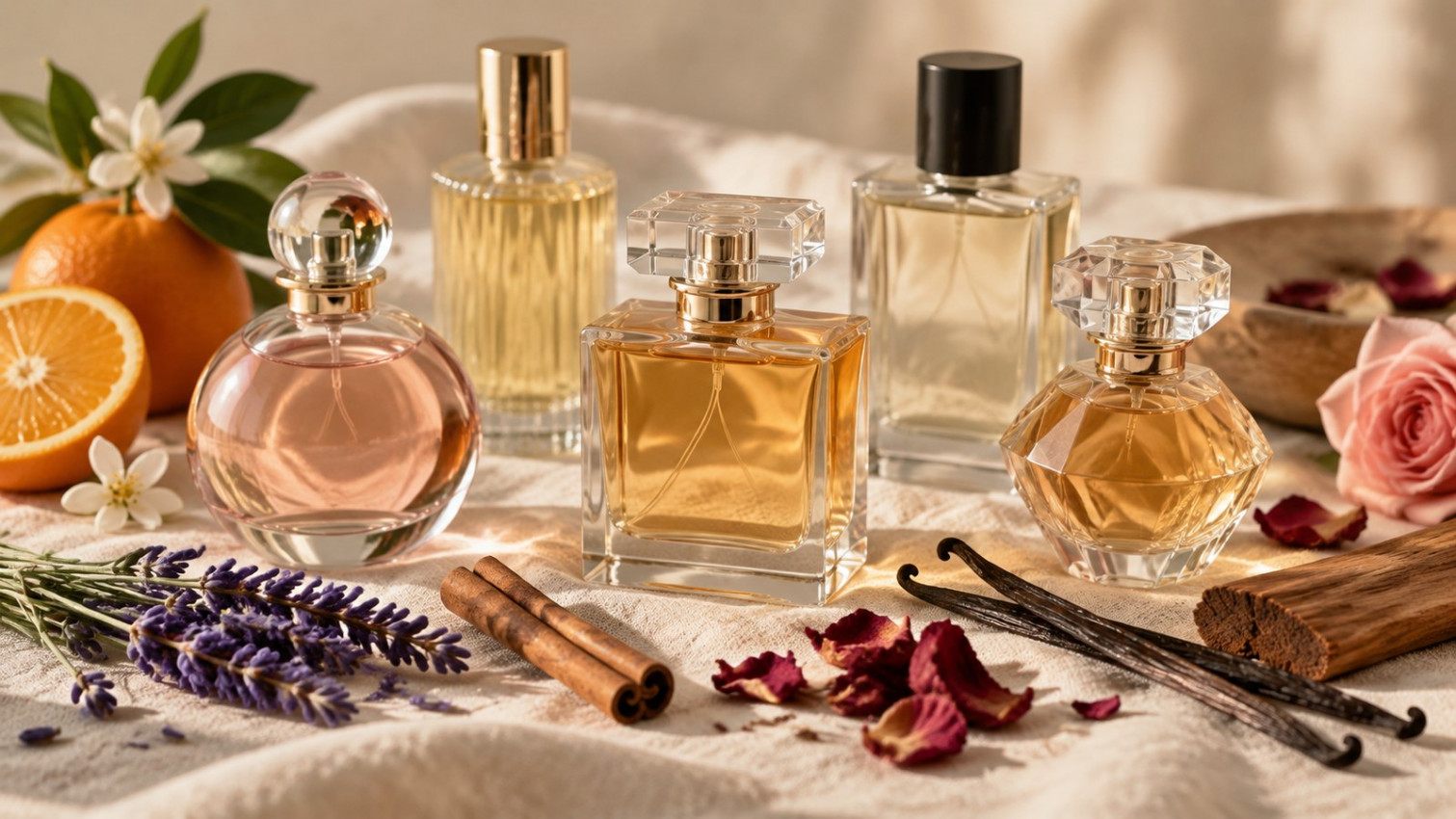
Fresh fragrances feel light, clean and bright. Think of cut citrus peel, green leaves, cool water or a breeze. Common ingredients in this group include lemon, orange, bergamot, mint and other green or watery notes.
People often reach for fresh scents in warm weather, at the office or for everyday wear because they feel easy and unobtrusive. If you like the smell of a freshly washed shirt or a squeezed lime, start here.
The floral family
Floral fragrances are built around flowers such as rose, jasmine, lily or orange blossom. Some are soft and powdery, some are bright and green, and some are rich and heady. Floral does not mean only for women. Many people of every gender enjoy florals, especially when the flower is paired with citrus or wood.
If you enjoy the smell of a garden after rain, a bunch of flowers on the table or a rose petal between your fingers, the floral family is a good place to explore.
The woody family
Woody fragrances lean on notes such as sandalwood, cedar, vetiver and other dry, earthy materials. They feel grounded and calm. Some are smooth and creamy, others are dry and smoky.
Woody scents are popular as a base in many perfumes, which is why you will notice wood notes even in fragrances that are not mainly woody. If you like the smell of a carpenter's workshop, a pencil shaving or a cedar cupboard, this family will probably suit you.
The oriental or warm spicy family
This family is warm, rich and a little sweet. It often includes spices such as cinnamon and cardamom, resins, vanilla and amber-like notes. Oud, a dark and resinous wood note, is often grouped here as well.
Warm scents tend to feel cosy and bold. Many people prefer them in cooler months or for evenings and special occasions. If you like the smell of a spice box, a warm kitchen or incense, try this family.
The fruity and gourmand family
Fruity fragrances use notes such as apple, berry, peach or tropical fruit. Gourmand fragrances go a step further and borrow from desserts, with notes like caramel, vanilla or chocolate. Both feel playful and friendly.
These are often a fun first step for people who think they do not like perfume, because the notes are familiar from food. The only thing to watch is balance, since very sweet scents can feel heavy if you apply too much.
The aquatic family
Aquatic fragrances aim to smell like water, sea air or rain. They are clean and cool, and they sit close to the fresh family. If a fragrance makes you think of a seaside walk or a cold shower after a hot day, it probably belongs here.
A quick comparison
| Family | Feels like | Often worn |
|---|---|---|
| Fresh | Light, bright, clean | Daytime, warm weather, work |
| Floral | Soft or rich, garden-like | Day or evening, depending on the flower |
| Woody | Calm, dry, grounded | Year round |
| Warm spicy | Rich, cosy, bold | Cooler months, evenings |
| Fruity and gourmand | Sweet, playful | Casual outings |
| Aquatic | Cool, watery, airy | Hot days, travel |
How to find your family
You do not need to memorise any of this. A few simple questions are enough to point you in the right direction.
- Which smells do you enjoy in daily life: citrus, flowers, wood, spices, sweets or water?
- Do you want something quiet that stays close to the skin, or something that people notice when you walk in?
- Where will you wear it most: office, college, family events, travel or evenings out?
- Which season are you buying for? Light scents often feel better in heat, and warm scents in cool weather.
Write down your answers. Then, when you read the notes on a product page or talk to a shop assistant, you can say exactly what you are after instead of guessing.
Top, heart and base notes still matter
Scent families describe the overall character. Notes describe how a fragrance changes over time. The top notes are what you smell first, the heart notes appear after a few minutes, and the base notes remain at the end. A perfume can open fresh and settle into something woody. When you test a fragrance, give it time on your skin before you decide. For a deeper look at this, read our beginner guide to perfume notes.
Testing tips
- Test one or two fragrances at a time. After that, your nose gets tired and everything starts to smell the same.
- Spray on your skin, not only on a paper strip, because skin changes how a scent develops.
- Wait a few minutes and smell again before judging.
- Smell the plain skin of your wrist or a cup of coffee beans between tests to reset your nose.
- If you are unsure, start with a small size or trial pack before committing to a full bottle.
Once you have picked a bottle, our guide on where to spray perfume and how much to use will help you apply it well.
Common questions
Can I like more than one family?
Yes. Most people enjoy two or three. You might wear fresh scents at work and warm ones in the evening.
Is a woody perfume only for men?
No. Scent families are not tied to gender. Choose what you enjoy wearing.
Does the family tell me how long a fragrance will last?
Not directly. Strength depends on how the fragrance is made and how your skin wears it, so the family is a guide to character rather than staying power.
What if I like a perfume in the shop but not at home?
Skin, weather and mood all change how a scent smells. That is why it helps to wear a sample for a full day before buying.
Final thoughts
Scent families give you a vocabulary. Fresh, floral, woody, warm, fruity and aquatic are enough to describe most perfumes you will meet. Start with the smells you already enjoy, test patiently, and let your own nose decide. If you would like to explore fragrances and see their listed notes, you are welcome to browse the collection at Shriex, or write to care@shriex.in with any question.
-
 October 22nd, 2026
-

Eau de Parfum vs Eau de Toilette: What Perfume Labels Really Mean
October 21st, 2026 -
 October 18th, 2026
-
 October 17th, 2026