
 Honest Prices. Always. Not for Everyone.


Eau de Parfum vs Eau de Toilette: What Perfume Labels Really Mean
Walk up to any perfume counter and the labels can feel like a secret code: Eau de Parfum, Eau de Toilette, Eau de Cologne, Parfum. These are not marketing words. They describe how much perfume oil is blended into the bottle, and that one detail changes how a fragrance opens, how it develops on your skin and how you should wear it. Once you understand the labels, choosing a perfume becomes much simpler.
Quick answer
The French terms on a perfume bottle tell you the concentration of perfume oils in the blend. Parfum is the richest, Eau de Parfum is the full-bodied everyday choice, Eau de Toilette is lighter and fresher, and Eau de Cologne is the lightest of all. A higher concentration generally means a deeper scent that wears longer, while a lower concentration feels airier and suits casual, daytime or hot-weather wear. Shriex perfumes are Eau de Parfum, the concentration most people find ideal for daily wear.
What the French terms actually mean
Every fragrance is a blend of perfume oils, alcohol and water. The difference between the labels is the ratio of oil to alcohol. Parfum, sometimes called Extrait de Parfum, carries the highest share of perfume oil. It feels dense and intimate, and a small dab is usually enough. Eau de Parfum sits one step lighter. It keeps real depth and character but feels comfortable enough for everyday wear, which is why it has become the most popular concentration for modern perfumes. Eau de Toilette is brighter and more sparkling, built around fresh top notes that make a strong first impression. Eau de Cologne is the lightest traditional style, originally a splash of citrus and herbs meant to refresh rather than to make a statement.
How concentration changes the experience
Concentration affects three things you will notice immediately. The first is the opening. Lighter concentrations lead with crisp, volatile notes such as citrus and herbs, so they smell fresh in the first minutes. Richer concentrations open more slowly and smoothly. The second is the dry-down, the scent that remains after the first hour or so. Higher concentrations give base notes like woods, vanilla, amber and musk more room to develop, so the fragrance feels warmer and rounder as the day goes on. The third is presence. A lighter concentration sits closer to the skin and feels personal, while a richer one leaves a more noticeable trail when you walk into a room.
None of this makes one label better than another. It makes them different tools. The art is matching the concentration to the moment.
Choosing by occasion and season
For office days, close meetings and daily commuting, a moderate presence works best: you want people near you to notice something pleasant, not the whole floor. An Eau de Parfum applied with a light hand, or an Eau de Toilette, fits this setting well. For evenings, celebrations and special occasions, a richer concentration gives you the depth and warmth that suits the mood. In hot and humid weather, fresher and lighter styles feel comfortable and never heavy, while cooler months are when warm, woody and spicy blends truly shine. If you are buying your first serious perfume, an Eau de Parfum is the safest starting point because it balances character with wearability across most situations.
How to test a perfume properly
Labels tell you the concentration, but your skin decides the result. Spray once on your wrist or the inner elbow, resist the urge to rub, and give the fragrance time. Judge it in three stages: the first few minutes for the opening, after half an hour for the heart, and later in the day for the base. Testing on a blotter strip is useful for a first shortlist, but never buy on a blotter alone, because warmth and skin chemistry change how a blend behaves. Test no more than two or three fragrances in one session, or your nose will stop telling them apart.
Getting the most from whichever concentration you choose
Application matters as much as the label. Spray on warm pulse points such as the wrists, the sides of the neck and behind the ears, and let the mist settle instead of rubbing it in, since rubbing crushes the top notes. Moisturised skin holds fragrance better than dry skin, so an unscented lotion underneath helps. Store bottles away from direct sunlight, heat and humidity; a cool, dark shelf keeps the blend stable. A wardrobe or drawer beats a bathroom windowsill every time.
Where Shriex fits in
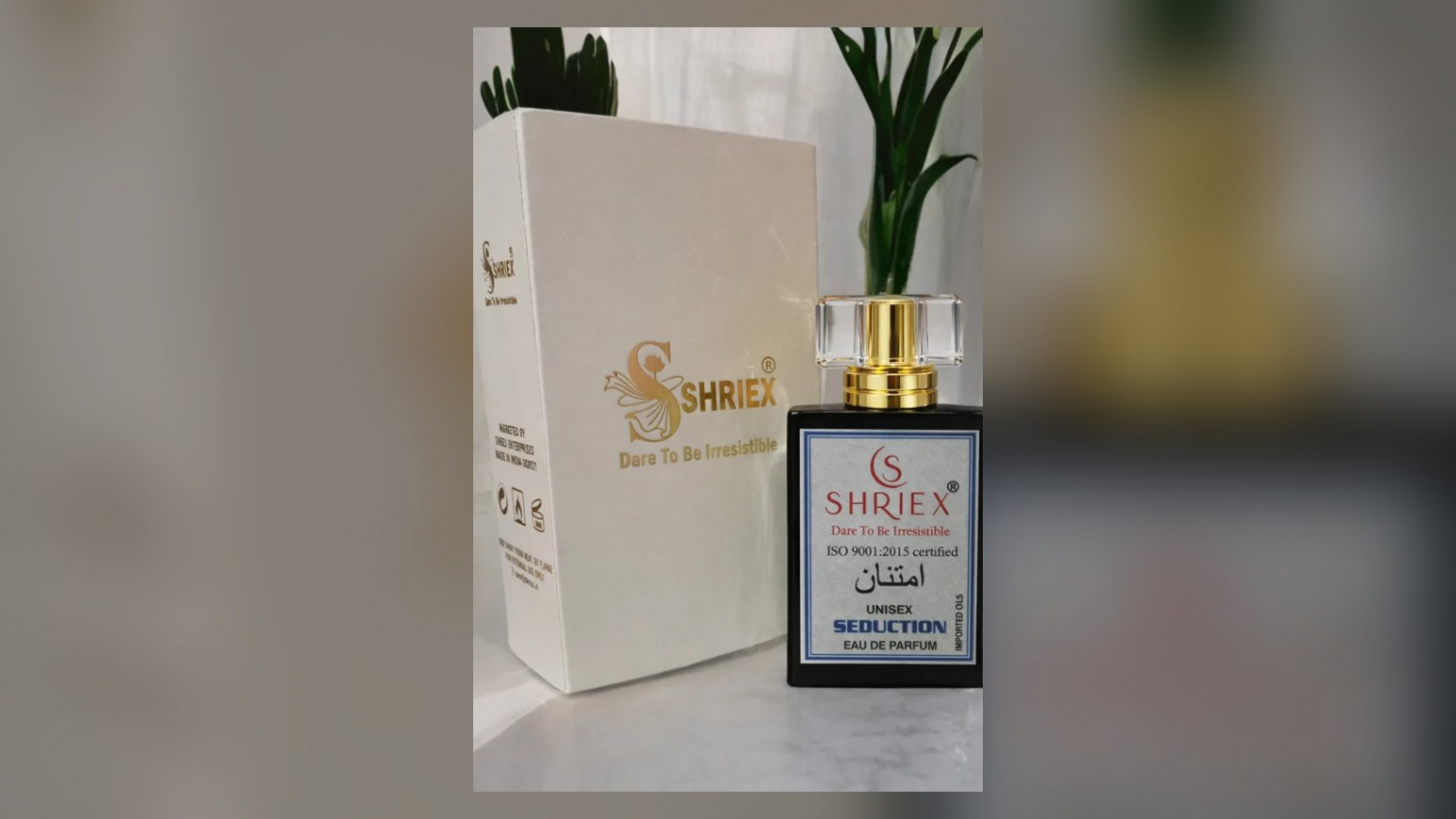
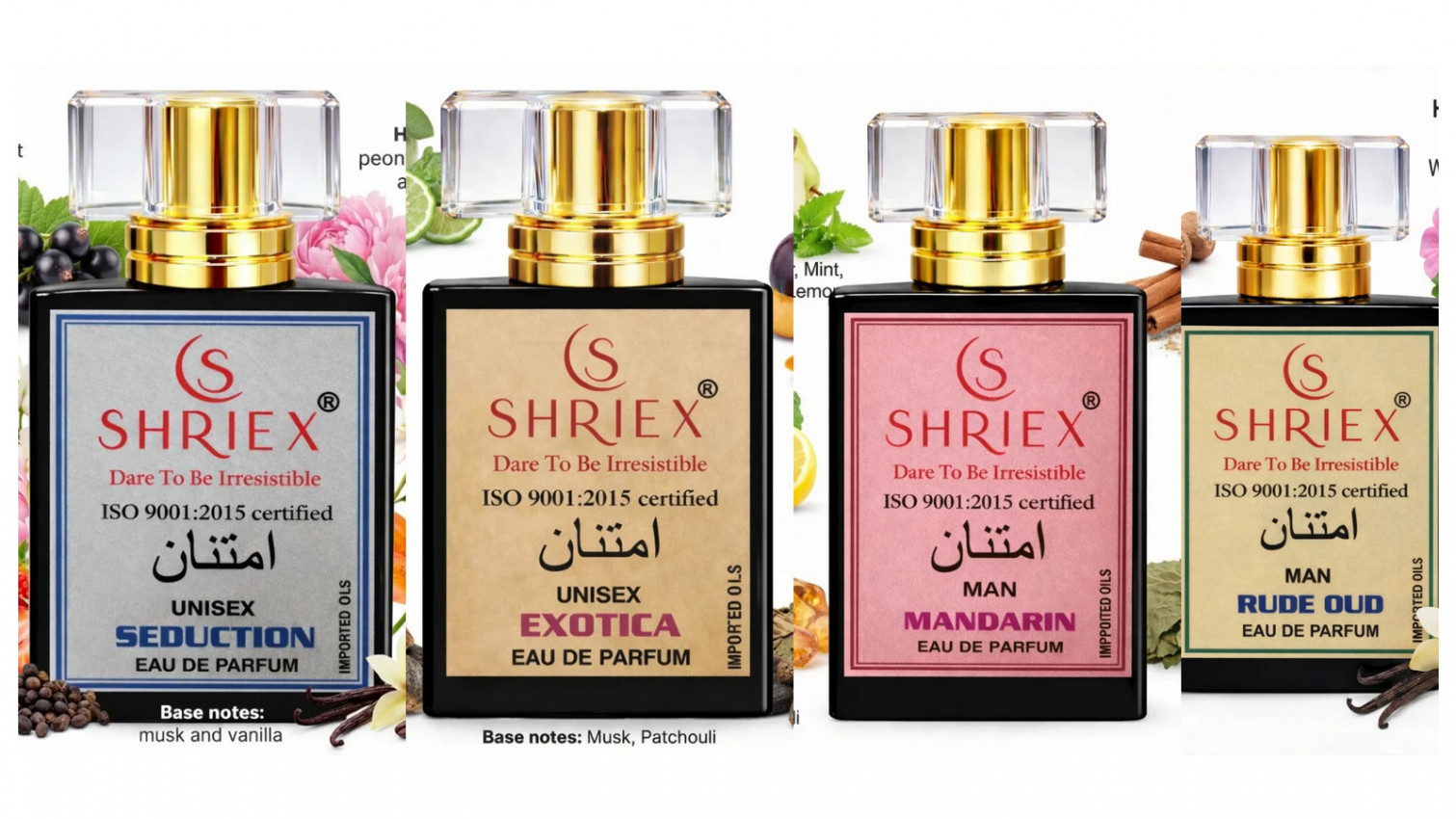
Every perfume in the Shriex range is an Eau de Parfum, the concentration chosen for its balance of depth and everyday comfort. The collection covers distinct moods so you can match the scent to the occasion rather than compromise. Seduction pairs top notes of blackcurrant and bergamot with a heart of jasmine and leather and a warm base of patchouli and vanilla. Exotica opens with apple and bergamot, moves into a heart of plum and orange blossom, and settles on vanilla and ambergris. The range also includes citrus-led and oud-led options, each in a 50 ml bottle, so a single concentration lets you build a small wardrobe for workdays, evenings and everything in between.
Reading the note pyramid before you buy
Every perfume description lists three layers: top notes, heart notes and base notes. Top notes are the first impression, usually citrus, fruits or fresh herbs, and they fade within minutes. Heart notes appear as the top settles, often florals, spices or green accords, and they define the character of the fragrance. Base notes are the foundation, typically woods, vanilla, musk, amber or leather, and they decide what you will still smell hours later. When you read a description, pay most attention to the heart and base, because that is the scent you will actually live with. A quick habit that saves money: if you dislike the listed base notes, skip the bottle no matter how attractive the top notes sound.
Building a small fragrance wardrobe
You do not need a shelf of twenty bottles. Three well-chosen perfumes cover almost every situation. The first is a fresh daily scent, something clean and easy that you can wear to work without thinking. The second is a warm evening scent with woods, spice or vanilla for dinners, weddings and celebrations. The third is optional but useful: a light, bright option for the hottest months or the gym bag. Buy one bottle at a time, wear it for a few weeks in real situations, and only then decide what gap remains. This way each purchase earns its place, and you learn your own taste along the way.
Conclusion
Perfume labels are a map, not a mystery. Parfum is the richest, Eau de Parfum is the balanced everyday choice, Eau de Toilette is light and sparkling, and Eau de Cologne is a fresh splash. Match the concentration to the occasion and the season, test on skin rather than paper, apply to pulse points, and store your bottles cool and dark. Do that, and every bottle you buy will serve you better.
FAQs
What is the difference between Eau de Parfum and Eau de Toilette?
Eau de Parfum contains a higher share of perfume oil than Eau de Toilette, so it smells deeper and generally wears longer. Eau de Toilette is lighter and fresher, which makes it pleasant for casual daytime and warm-weather use.
Which concentration is best for daily wear?
Eau de Parfum is the most versatile choice for daily wear because it balances depth with comfort. Applied lightly, it suits the office; applied normally, it carries into the evening.
Does a higher concentration mean a stronger smell?
It means a deeper and longer-developing scent rather than a louder one. Strength also depends on the notes themselves: fresh citrus feels bright even at high concentration, while oud and vanilla feel rich even when applied sparingly.
How should I apply Eau de Parfum?
One or two sprays on warm pulse points such as the wrists and the sides of the neck are enough. Let the mist dry on its own instead of rubbing, so the top notes stay intact.
Are Shriex perfumes Eau de Parfum?
Yes. The Shriex range is Eau de Parfum, offered in 50 ml bottles across distinct scent profiles, from citrus-led freshness to warm oud.
-
 October 22nd, 2026
-
Perfume Scent Families Explained: Fresh, Floral, Woody and Warm
October 19th, 2026 -
 October 18th, 2026
-
 October 17th, 2026